

Almost There
Lily Allen album review (+ a little more)

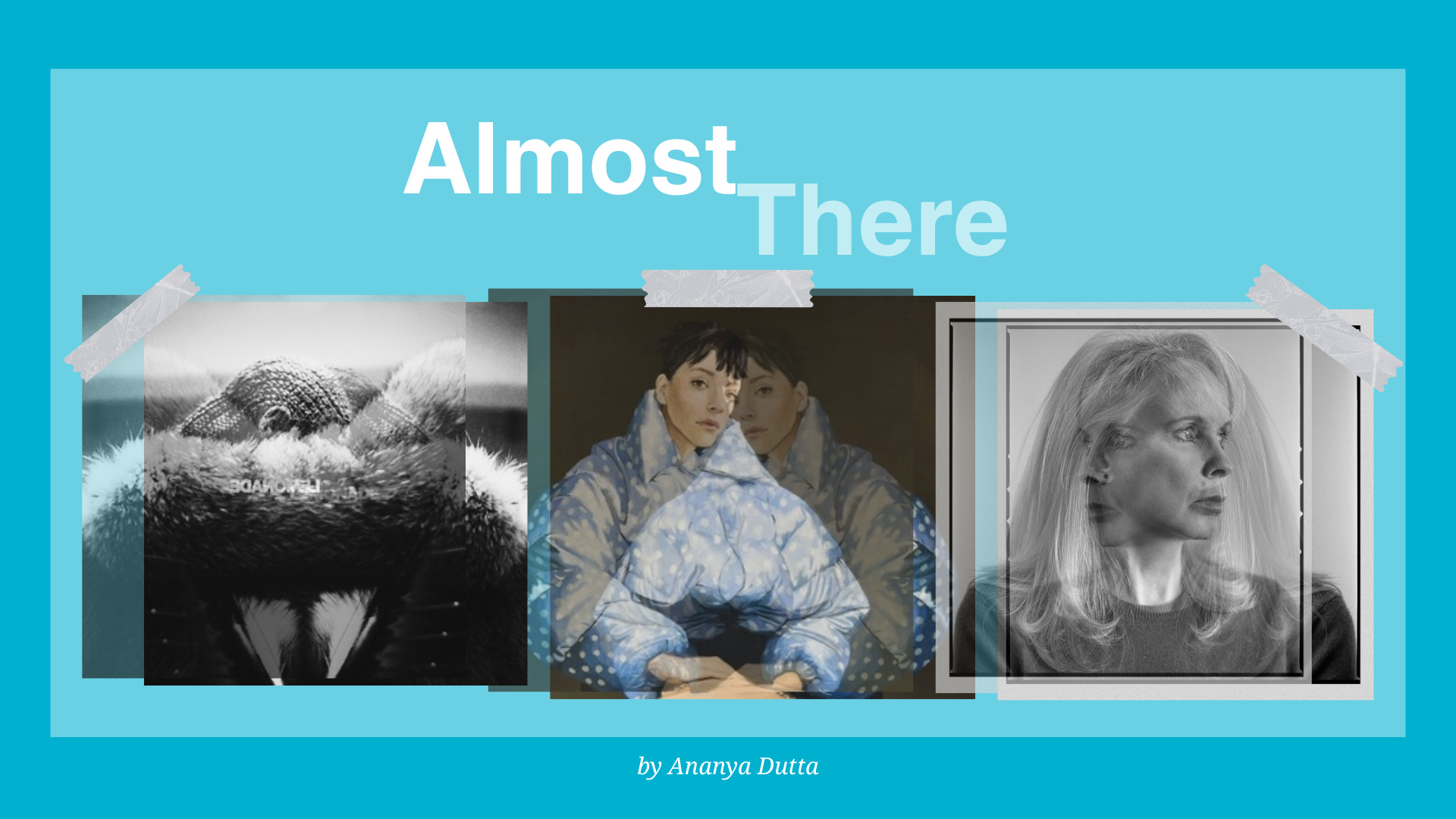
I listened to Lily Allen’s West End Girl in October.
I was excited; the album was sold to me as an addictive chronicle of Allen’s now-infamous marriage to Stranger Things actor, David Harbour. I listened to it over the weekend, while building furniture and shopping for costumes.
Allen’s album struck me. Not immediately, but the effects of its most compelling elements compounded over time: blunt lyrics, competent production, and a tone that weaves nimbly between playful and cynical, marketing-friendly and suicidal. Initially, I saw the album as a tactic, a Trojan Horse of a project intended to stage a career comeback for Allen, rather than meaningful art.1 By the third listen, I’d decided that wasn’t fully true. I spent the next month or so hunting for a metaphor, something that could help specify my experience.
Come early November, I found it, here, in Mary Gaitskill’s short fiction piece, The Agonized Face:
“And yet again I sensed a disturbing subliminal message bleeding through the presentation: a face of sex and woman’s pain. The face had to do with disgrace and violence, dark orgasm, rape, with feeling so strong it obviates the one who feels it. You could call it an exalted face or an agonized face; in the context of the feminist author, I am going to call it ‘the agonized face.’”
An out-of-touch celebrity feminist author is betrayed, for a moment, by her face. The narrator clocks her expression as emblematic of the underlying truth — the painful nature of navigating the world in a gendered, politicized body (all thanks to Craft Literary for the analysis).
To me, the agonized face is a marker of emotional honesty. Its presence creates a bond, often fleeting, between the beholder and the gazer that discards the layers that may widen the distance between the two; celebrity, geography, age, culture, etc. etc.
+++
The earliest memory I have of locking eyes with the face is when I first listened to Lemonade, a seminal Beyoncé work. I initially came across Lemonade as an unhappy, hairy middle schooler and still find new entry points to the work today, as an unhappy, more manicured twenty-something.
On Lemonade, the agonized face is a stare. It locks my eyes in every song, in the visuals. I see it in the dynamics, the placement of the crescendos and the strategic interludes. I see it in the genre-bending variation of rhythm — somber synth on ‘Pray You Catch Me’ turns into bright, ska/reggae-inspired drums on ‘Hold Up’ turns into raging, Zepplin-esque cymbals on ‘Don’t Hurt Yourself’ (UMich Film Criticism). I see it in the politically-aware spoken-word component. The production is dreamy and earthy, the thought patterns uncertain, but beautifully so. The album is painfully real. It makes you feel something about betrayal and the path to reconciliation.
On West End Girl, I catch glimpses. Allen’s famously blunt lyricism brings out the gaze on the album’s titular track, on the sardonic ‘Madeline’ (Why would I trust anything that comes out of his mouth… I’ve gotten old, gotten ugly), on the sad and sexy dancehall mix, ‘Nonmonogamummy’ (I’m just trying to be open / and I revert to people pleasing) and in the philosophy of ‘Beg for Me’ (I wanna feel held, I wanna be told I’m special and I’m unusual / I want your desire, I wanna be spoiled, I wanna be told I’m beautiful).
It also helps that Allen’s voice is girl-next-door sweet. The harmonies are familiar and inviting, like vanilla frosting on a cupcake. Those elements, layered on top of the candid prose and the emotional depth of her subject matter (divorce), almost ensure the album’s creative merit by following a tried-and-true formula: put two interesting, conflicting objects next to each other.
+++
When I map Allen’s gaze in my mental cartography, I find it reaching a few different places; memories of heartbreaks that are old, that are fresh; some that are mine, some that are not; and some that haven’t happened yet, but I’m afraid almost certainly will.
One memory stands out: It’s Thursday night, and I’m sitting across from one of my maybes. A wisp of a boy bounces his legs under the bar table. He’s dancing around an impending breakup by insisting on his distaste for monotony. His friends all have girlfriends, you see, and then they’ll get married, and have kids, and move to a Connecticut suburb.
When it’s all said and done, I wonder, for a moment, what would happen if I give in to my most base instincts; flip the table, pour my glass of Guinness over his head.
Looking back, I realize I’d mischaracterized our roles. More than lovers, or friends, the wisp and I were co-architects of a shared fantasy. For three years, we’d been getting off on escalating a shimmery haze of almosts and maybes and only ifs. We got a taste of the consequences when we tried to impose the mirage onto the unyielding metal of our real lives.
I knew this, I suppose. And so, the table remained upright. Everyone remained dry. Climaxes are not warranted for something that never really existed.
Most people I know have experienced some version of this story. I’ve landed on a somewhat hubristic idea: I think my generation is in a constant state of edging. We are systematically denied our climaxes—sexual, emotional, spiritual—primarily by the digital scaffolding that shapes our world. In other words, we are obsessed with being almost there.
You know the story. We live in a mirror world, dictated by algorithms that put us in a near-constant state of metaphorical (and maybe actual) edging. We scroll through reel after reel, consume cancerous trends that grow (and decline) exponentially, date with the same fickle instincts intended to shop a good deal on Amazon, discuss who to sleep with, informed by lifeless, app-driven insights. We hunt for connection as consumers; there is always something or someone new, or better, or more correct; only, we can’t ever seem to find it, can we?
When you’re living in a mirror world, albums like West End Girl and Lemonade act as an oasis. Basking in the stare of the agonized face creates a shelter within the fake world, allowing its recipients (i.e., me, you) to better explore complex, real-world emotions. Good art (and to be good, it’s got to be honest) gives the climax back to us, in the form of an album, a performance, a multi-dimensional story.
Some artists are more successful at mastering the stare than others. Does West End Girl quite strike the delicious artistic balance that Lemonade did so flawlessly? Does Allen’s gaze orchestrate the exchange between raw and curated, vain and humble, self-aware and transcendent, the way that Beyoncé’s did?
In my opinion, no. Not quite.2 However, I’ll always take glimpses of brilliance over total obscurity.
It’s not the same, but it is a home for the emotion.
Love and light,
Ananya
+++
And thank god I waited till December to publish this. This was almost a very different, much more boring piece.
To be fair, I don’t think Lily Allen was trying to make Lemonade. It feels pretty clear that the album’s primary goals were: to serve as an outlet for her pain, to commandeer the divorce narrative, and to orchestrate a career comeback. All of which I’d say she achieved. Kudos.
will be Ruminating about this